

Downspout Extensions
Commercial-grade, smooth-wall underground downspout systems that carry roof runoff hundreds of feet from your foundation — not just a few inches.
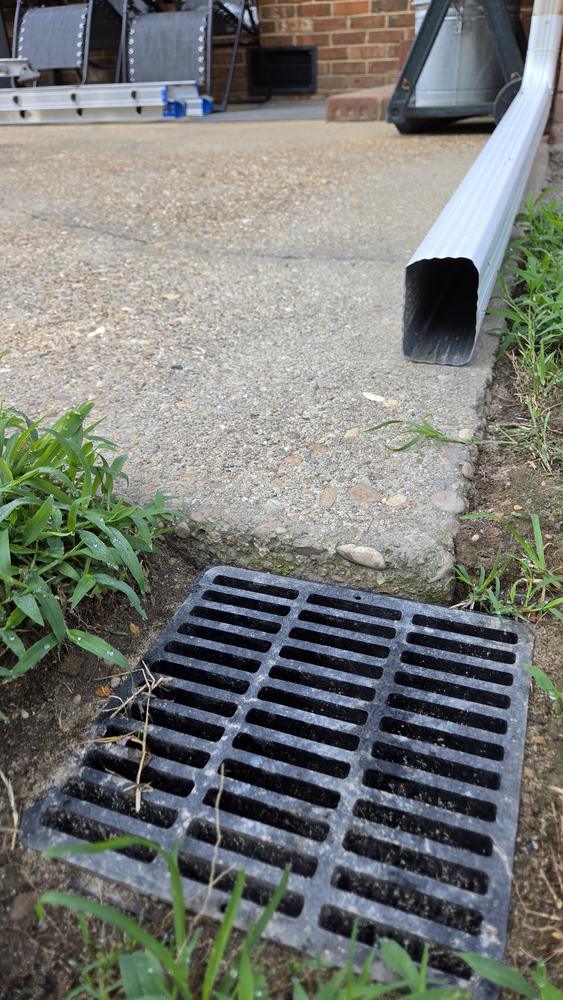
Your roof is the single largest water-collection surface on your entire property. During a typical coastal storm, thousands of gallons of rainwater pour off your shingles in a matter of minutes. If your downspouts simply dump that water right at the base of your foundation or into cheap, flexible plastic tubes, you are actively inviting foundation settlement, crawlspace flooding, and severe yard erosion.
A splash block or standard garden extension only pushes water a few inches away from your walls — allowing it to sink straight down into the loose fill soil around your home. Underground downspout extension networks capture roof water right at the gutter line and transport it hundreds of feet away to a safe, legal discharge point.
We design and install commercial-grade, smooth-wall subterranean downspout systems across Southside Virginia and Northeast North Carolina to keep your foundation dry and your lawn free of standing water.
- Buried, solid-pipe extensions
- Protects foundations, siding & concrete
- Ties into existing gutters
- Clean, mulched-over finish
Key Design Features of Our Downspout Networks
Ultra-Thick Smooth-Wall Pipe
We offer thick, rigid, smooth-wall PVC or HDPE pipe. The glass-smooth interior maximizes water velocity, allowing leaves, silt, and shingle grit to flush out of the pipe without stopping.
Integrated Cleanout & Leaf Adapter Ports
We offer custom leaf-diverters or cleanout adapters directly below your gutter transitions. This acts as a primary defense line, preventing large debris from ever getting into your subterranean pipes while giving you an easy access point to flush the lines if needed.
Industrial Stainless Steel Hardware
All cleanouts, transition fittings, and adaptors are mechanically secured using high-grade stainless steel fasteners or glued joints that resist rust and corrosion underground.
Dynamic Termination Emitters
At the discharge point, we install heavy-duty pop-up emitters or curb hole cuts. When the downspout fills with rushing water, the lid pops up to release flow onto your curb. When the flow stops, the lid snaps shut tightly. Our curb hole cuts are 4-inch outlets for our solid pipe.
Subterranean Downspout & Roof Runoff Q&A
At an absolute minimum, roof water should be discharged at least 10 to 15 feet away from your foundation walls. Our standard is a 30-foot minimum. Dumping water any closer allows it to soak directly into the loosened backfill soil surrounding your foundation footings, creating intense hydrostatic pressure that leads to cracked masonry, flooded crawlspaces, and basement leaks. For properties with severe clay or flat elevation, we often extend lines 20 to 50+ feet to reach natural slope drops or street swales.
When installed correctly with positive downhill slope, smooth-wall PVC lines will not burst because water continuously drains out via gravity rather than sitting trapped in the pipe.
No, and no reputable drainage contractor will ever do this. Roof downspouts collect massive volumes of water along with roof shingle grit, twigs, and organic debris. If you tie a downspout directly into a perforated French drain line, you will rapidly flood the French drain with surface debris, clogging the gravel envelope and forcing dirty roof water into your groundwater grid. Downspout lines must always remain solid, non-perforated conduits kept completely separate from subterranean groundwater collection networks.
Stop losing your landscaping to roof runoff
Is overflowing roof water washing away your landscaping or flooding your foundation? Don’t settle for collapsing corrugated tubes — contact us today to schedule an on-site evaluation and get a commercial-grade downspout network installed.